
From RFQ to Container: Lead Times, Peak-Season Planning, Payment Terms and Inspection — The Complete Order Timeline
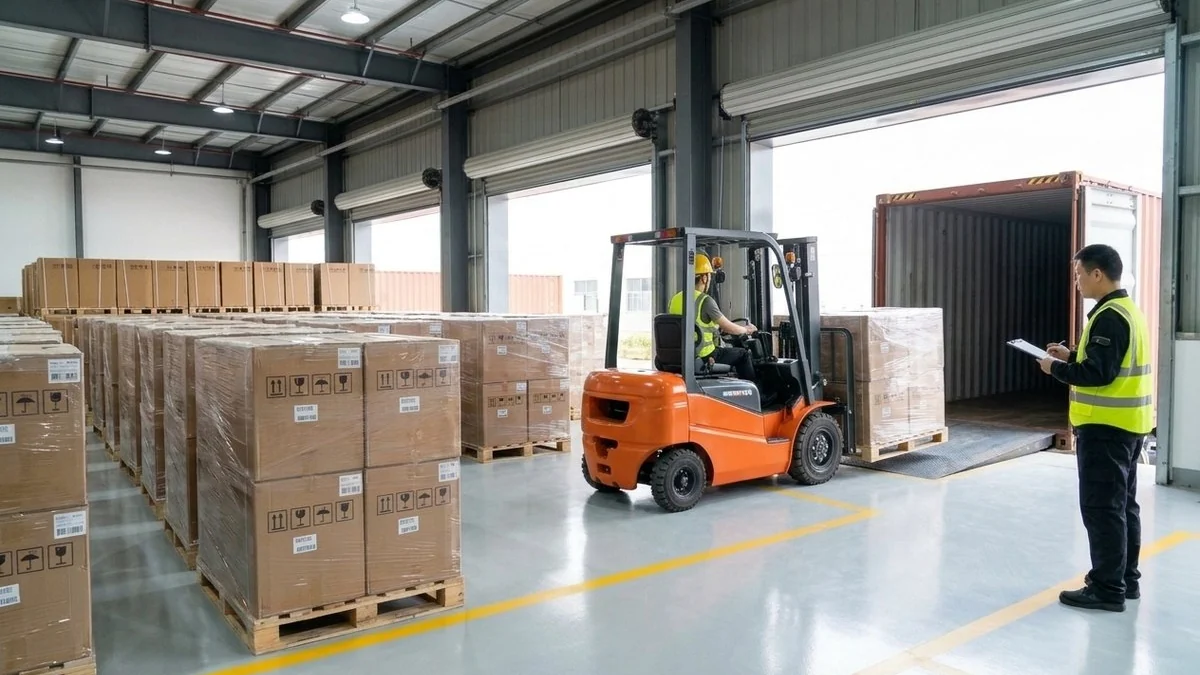
- A typical first-order timeline from RFQ to FOB vessel loading runs 8–12 weeks including golden-sample sign-off, artwork, and 45-day mass production.
- For Q4 / Black Friday retail launches, lock specs and place purchase orders by June–July to beat peak-season factory and ocean-freight bottlenecks.
- Tie final balance payment to passing AQL 2.5 pre-shipment inspection (PSI) and container-loading verification.
Most first-order disasters are not product failures. They are timeline failures: an RFQ so vague that three factories quote three different products, artwork approved two weeks late, a peak-season slot that was never actually booked, a balance payment argued about while the container misses its vessel.
The order process for an air fryer oven is predictable — standard OEM production runs 30–45 days after deposit and artwork approval on supplier-stated figures, and custom-mold programs run 60–120 days (Sources: factory guides and FAQs) — but only if every gate before production is managed as seriously as production itself.
This article lays out the complete timeline, gate by gate, so you can plan backwards from your selling season instead of forwards from your deposit.
1. The RFQ Pack: Comparable Quotes Come From Comparable Briefs
A factory can only quote what you specify, and vague RFQs manufacture fake price differences. EleTavo's OEM guide warns that quotes diverge most on usable capacity and on which accessories are included (Source: EleTavo), and one factory brief format demands country, channel, and warehouse date before any quote at all. Your RFQ pack should contain, at minimum:
Target model/platform, with usable capacity, internal dimensions, and a "what fits" requirement (pizza size, pan, whole chicken)
Electrical version: voltage/frequency, plug type, rated power, and target market — 120V/60Hz US vs 220–240V/50Hz EU is a different build, not a label change
Function set and control type (mechanical / digital / smart), temperature range, and preset list
Accessories in the box, itemised — racks, bake pan, crisper tray, rotisserie
Customization scope: logo method, color, color-box artwork status, manual languages, recipe book
Certification required by exact model for your market, and who pays for any new testing
Packaging spec, target quantity per tier (500 / 1,000 / 3,000 / 5,000), destination port, and required warehouse date
Ask every factory for tiered FOB on the same spec, with tooling, certification, packaging, and accessories itemised separately. That single discipline eliminates most "cheapest quote" traps before they cost you a season.
2. Samples, PPS and Mass Production: The Three Gates
Treat the order as three gates, each with a sign-off, not as one long wait. Gate 1 — Samples. Factory sample timelines are supplier-stated at 7–10 days for existing platforms (Source: Qiaokang factory FAQ). Use the sample for a cooking test and a spec audit: measured power at your voltage, thermostat accuracy, usable capacity with the crisper plate fitted, and noise.
Approve in writing, with photos and a signed spec sheet — memory is not a standard. Gate 2 — Pre-production sample (PPS). After artwork and packaging are approved, the PPS is the production-intent unit in final colors, with final manual and color box.
This is the last cheap moment to catch manual typos, barcode errors, and wrong plugs — errors that retailer production testing explicitly checks, down to QR codes and customer-service numbers (Source: Walmart production-testing summary). Gate 3 — Mass production with in-process control. Confirm the factory's IQC/IPQC/FQC flow and its 100% end-of-line tests — hipot/dielectric, leakage, earth continuity — before production starts, not when the PSI inspector finds the gaps.
3. The Two Timelines: 30–45 Days Standard, 60–120 Days Custom
Put the right number in your plan. For existing-platform OEM orders, supplier-stated lead times cluster at 30–45 days after deposit and artwork approval: Zhenmei states 35–45 days for a first order and 25–30 days for repeats; Qiaokang states 35–45 days (Source: factory FAQs).
For custom-mold / full ODM programs, industry benchmarks gives 60–120 days, with custom molds at a supplier range of $15,000–80,000 in its OEM guide and $20,000–50,000 plus 30–45 days in its sourcing guide — supplier ranges, not quotations.
The gap between the two timelines is your product-development decision made visible: every "small change" that requires new tooling moves you from the first column to the second.
| Stage | Standard OEM (existing platform) | Custom / new mold |
|---|---|---|
| Samples | 7–10 days (supplier-stated, Qiaokang) | Longer — after design freeze and tooling |
| Tooling | None / minor modification | 30–45 days mold time inside a 60–120 day program |
| Mass production | 35–45 days first order; 25–30 days repeat (Zhenmei) | 60–120 days total program |
| Certification (if new) | Existing exact-model certificates — verify numbers | New testing runs in parallel; do not let it become the critical path |
So you can compare like with like, our own numbers at Linden are: samples ready in 7–15 days (our published planning range for samples and trial orders), first and repeat orders shipped on a 45-day mass-production lead time, and new-mold programs scoped per project, with the full program timeline — tooling, samples and certification — confirmed in writing at project kickoff.
In every case, the clock runs from the start conditions written into your order: deposit received and artwork approved. Our three assembly lines run at a normal-shift capacity of 3,000 units per day, which is the number behind the peak-season rules in the next section.
4. Peak-Season Planning: Book the Slot, Not Just the Order
Oven demand is seasonal at retail — Black Friday / Q4 and retail resets do not move because your factory is busy. Buyer guides treat peak-season capacity as an audit item in its own right: standard OEM practice advises buyers to "audit factory capacity during peak seasons", and Linden's manufacturer-selection guide makes "production stability" a standalone selection factor (Source: Linden/FSLinden).
Factories assert capacity — one states 10,000 units/day across 40,000 m², flagged as supplier-stated (Source: Zhenmei) — but an assertion is not a booking. Work backwards: warehouse date, minus shipping and customs, minus PSI and rework buffer, minus production, minus artwork approval — and put a capacity reservation in your PO terms for peak months, with a named consequence if the slot slips.
Order packaging and long-lead accessories early; cartons and printed manuals are frequent silent bottlenecks. For a Q4 retail peak, your production conversation belongs in the first half of the year, not the quarter of the peak.
At Linden, peak-season capacity for Q4 programs is reserved against confirmed orders: the reservation deadline, any peak-season minimum per model, and any expedite surcharge for late orders inside the reserved window are each confirmed in writing when your program is booked. Commitments like these — not a general promise of "stable supply" — are what to ask every factory for, in writing.
5. Payment Terms and Trade Assurance: Negotiated, Not Standard
Read this section carefully, because it is where factory blogs are most often misleading by omission: in our research, most factory blogs do not publish payment terms at all, and the only explicit trade term retrieved was "30% deposit, balance against B/L copy" in a secondary sourcing summary (Source: Accio sourcing summary via Global Sources listings context).
Present that structure — a deposit to start production, the balance against shipping documents — as commonly negotiated, never as an industry standard and never as a term any specific factory has committed to until it is in your proforma invoice.
What you should negotiate and document: deposit percentage and what it triggers (material purchase, production slot); the balance trigger — before shipment, against B/L copy, or after PSI pass — and how those three interact; the inspection right (balance released only after your PSI passes, per Section 6); and the protection rail.
For Amazon and smaller private-label buyers, Alibaba Trade Assurance plus pre-shipment inspection is the default protection pattern described in sourcing guides, and experienced sellers verify a factory's real US shipment history through tools such as the Jungle Scout Supplier Database before wiring money (Source: sourcing guides).
Whatever you agree, write the currency, the bank-charge split, and the late-delivery remedy into the PI — a chat promise is not a term.
For reference, our own structure at Linden is: FOB terms, with the deposit and balance agreed by negotiation — including how the balance trigger interacts with your pre-shipment inspection, which is written into the proforma invoice rather than left to a chat thread.
Platform protection such as Trade Assurance is confirmed per order through the platform's own order process, and letter-of-credit terms are negotiated per order against order value and customer credit assessment. Check the equivalent lines on every proforma invoice you are comparing — the differences hide there, not in the headline price.
6. Inspection, Loading and Documents: The Final Checklist
The standard inspection framework buyers enforce is AQL 2.5 major / 4.0 minor under ISO 2859-1 — under AQL 2.5, a batch of 1,000 fails at more than 10 major defects, per the industry benchmarks OEM guide (Source:) — carried out as a third-party pre-shipment inspection by firms such as SGS, Bureau Veritas, Intertek, or TÜV, named across industry benchmarks, industry benchmarks, and standard OEM practice guides (Sources:).
Book the PSI when production is 100% complete and at least 80% packed; do not accept "almost finished" inspections.
Final checklist — do not release the balance until every box is ticked:
PSI report passed at AQL 2.5 / 4.0, with photos of tests (hipot, function, cooking spot-checks)
Carton count, dimensions, and gross weight verified against the packing list; loading maths checked (one factory example: 360 / 720 / 1,008 pcs per 20GP / 40GP / 40HQ for a 14L rotisserie oven — supplier-stated, Source: Qiaokang)
Loading figures for your own model confirmed — for our KA1203, loading is 570 pcs per 20GP, 1,220 pcs per 40GP and 1,420 pcs per 40HQ
FOC spare parts loaded — market norm is 1–2% FOC spares in the container (Sources: Lanka; Zhenmei)
Container loading photos (start / middle / full / sealed) received
Documents complete: commercial invoice, packing list, B/L, certificate of origin, and exact-model test reports/certificates for your market
Manual, barcode, and label versions match the approved PPS
Buyer FAQ
When does the lead-time clock actually start? On supplier-stated terms, after deposit and artwork approval (Source: factory FAQs). Late artwork is the commonest self-inflicted delay.
Can I inspect before paying the balance? That is the normal negotiated structure — PSI at AQL 2.5/4.0 by a third-party firm before balance release (Sources:) — but it must be written into your PI.
Is 30/70 a standard term? No published standard was found. A 30% deposit with balance against B/L copy appears in one secondary summary (Source:); everything else is negotiation.
How early should I order for Q4? Work backwards from your warehouse date through shipping, PSI buffer, and a 30–45 day (standard) or 60–120 day (custom) program (Sources:) — for custom tooling, that means starting in the first half of the year.
Start Your Timeline With an RFQ Pack Review
Send us your draft RFQ — or just your target model, market, and warehouse date — and we will return tiered pricing on a like-for-like spec and a dated timeline from sample to container for your program.
Contact Linden at [email protected] or +86 156 2237 7841 — we reply with tiered pricing within 8 business hours, and on request we can share our standard deliverables — product files, the compliance pack, the artwork system, the quality baseline (golden sample and inspection standard) and shipment support including export documents — before you place an order.
Ready to Spec Your OEM/ODM Air Fryer Oven Line?
Get factory FOB pricing, test certificates, and 500–1,000 unit MOQ customization options within 24 hours.
Related Sourcing Guides

Air Fryer Oven Certifications by Market: ETL/UL 1026, CE, UKCA, RCM — What Your Exact Model Must Have
If you import, distribute or list countertop air fryer ovens, certification is not a paperwork detail at the end of the deal — it is the first filter your...
OEM vs ODM vs Private Label for Air Fryer Ovens: MOQ, Tooling Cost and Who Owns the Mold
"Private label" gets used to mean three different deals, and the difference is worth tens of thousands of dollars. In one deal you are putting your logo...